Banded Leporinus | Leporinus affinis
SKU 1140776
Original price
£0.00 GBP
-
Original price
£0.00 GBP
Original price
£0.00 GBP
£14.00 GBP
£14.00 GBP
-
£14.00 GBP
Current price
£14.00 GBP
Live Fish Are Click and Collect Only - We Do Not Deliver Livestock
Please note that we do not ship live animals. You can order online and collect in store.
Special Offer - Buy Any 5 Fish & Get 6th Fish Free Mix & Match
Offer is automatically applied when you add any six fish to cart
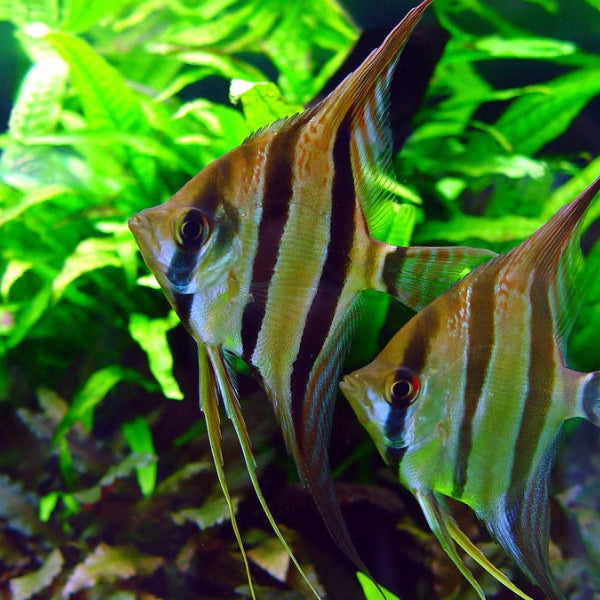
Banded Leporinus is a striking, active South American characin known for its bold yellow and black stripes. Because they grow quite large (up to 30 cm) and can be a bit nippy, they do best in larger setups (300+ liters) with robust tank mates and plenty of vegetable matter in their diet.
Species Overview
-
Common Name: Banded Leporinus (Black Banded Leporinus)
-
Scientific Name: Leporinus affinis
-
Origin / Habitat: South America; Amazon and Orinoco river basins, fast-flowing rocky waters
-
Temperament: Semi-aggressive / Active (can be quarrelsome; known to nibble fins of slow-moving or long-finned tank mates)
-
Care Level: Intermediate
-
Lifespan: 8 to 15 years
Size & Tank Requirements
-
Maximum Adult Size: 25 to 30 cm
-
Minimum Tank Size: 300 liters or larger (at least 120 cm to 150 cm in length for adults)
-
Tank Setup:
-
Substrate: Fine sand or smooth, small-grained gravel
-
Decor: Heavy driftwood, rock formations, and robust live plants (such as Anubias or Java Fern tied to decor, as they will readily eat delicate plants)
-
Flow: Moderate to high flow with strong oxygenation and tight-fitting lids (they are exceptional jumpers)
-
Water Parameters
-
Water Temperature: 22°C - 26°C
-
pH Range: 5.5 - 7.5
-
Water Hardness (dH): Soft to moderate (up to 20 dGH)
-
Maintenance Routine: Regular weekly partial water changes (25-30%); sensitive to high nitrates and requires high water quality
Diet & Feeding
-
Diet Type: Omnivore (with a strong preference for plant matter/veggies)
-
Preferred Foods: High-quality sinking pellets, flakes, algae wafers, blanched vegetables (zucchini, peas, cucumber), and occasional meaty foods (frozen bloodworms, brine shrimp)
-
Feeding Schedule: Feed 1–2 times daily in small portions
Social & Tank Mates
-
Social Behavior: Gregarious; best kept either as a single specimen or in a large group of 8+ individuals to disperse aggression among the shoal.
-
Compatible Tank Mates: Robust, fast-swimming mid-to-top dwelling fish, large peaceful cichlids, large characins, Doradid (talking) catfish, and Loricariids (plecos).
-
Species to Avoid: Small nano fish or tetras (which may be viewed as food), slow-moving fish, and long-finned species susceptible to fin-nipping.
Breeding Notes (Optional)
-
Breeding Difficulty: Extremely difficult / Not commonly bred in home aquariums
-
Spawning Method: Egg scatterer (migrates in the wild to flooded forests to spawn)
-
Fry Care: No parental care provided; commercial breeding is typically hormone-induced in large aquaculture settings.
Purchase Notice: Live Animals Are Click and Collect Only. You can order online and choose click and collect and we will hold it for you.