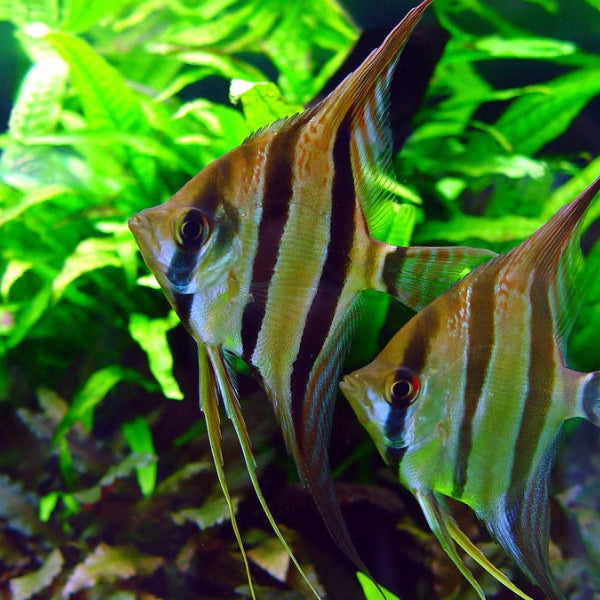
Platinum Angelfish
Live Fish Are Click and Collect Only - We Do Not Deliver Livestock
Please note that we do not ship live animals. You can order online and collect in store.
Special Offer - Buy Any 5 Fish & Get 6th Fish Free Mix & Match
Offer is automatically applied when you add any six fish to cart
🐠 Platinum Angelfish Overview
🔹 Basic Info
-
Scientific name: Pterophyllum scalare
-
Common names: Platinum Angelfish, Silver/White Angelfish (depending on strain)
-
Family: Cichlidae
-
Origin: Amazon Basin (Peru, Colombia, Brazil) — Platinum is a selective breeding variant, not wild-type
-
Size: Up to 6 inches (15 cm) in body height; fins can reach 8–10 inches tall
-
Lifespan: 8–10 years (with proper care)
🌿 Tank Requirements
-
Minimum tank size: 30 gallons for a pair; 55+ gallons for a small group
-
Water temperature: 25–29 °C (77–84 °F)
-
pH: 6.5–7.5
-
Hardness: 3–10 dGH
-
Filtration: Moderate to strong, but avoid too much current (they prefer calm flow).
-
Lighting: Moderate to bright — brings out their metallic sheen.
-
Aquascape:
-
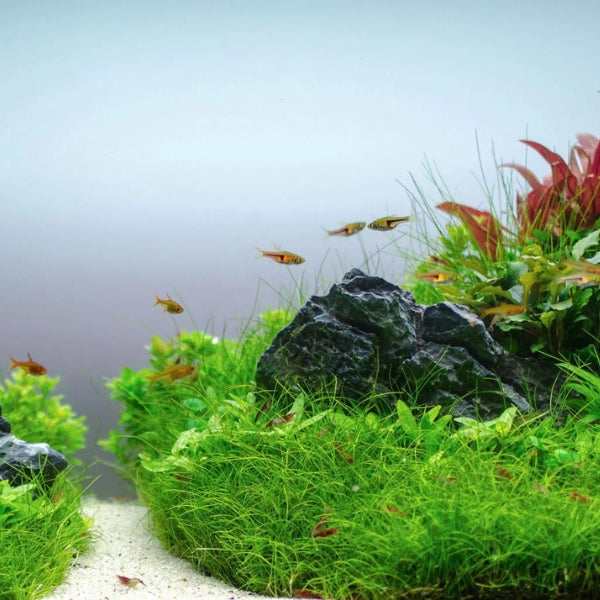
Tall plants (Amazon swords, Vallisneria) to complement their vertical shape
-
Driftwood and rocks for structure
-
Open swimming space in the mid–upper levels
-
Dark substrate enhances their white-silver coloration
-
🍽️ Diet
Platinum Angelfish are omnivorous and thrive on variety:
-
High-quality flakes or slow-sinking pellets
-
Frozen or live food: bloodworms, brine shrimp, daphnia
-
Vegetable matter: blanched spinach or spirulina-based foods
Feed 2–3 times daily in small portions.
🧬 Behavior & Temperament
-
Semi-aggressive (typical of cichlids). Peaceful when young, but territorial as they mature or pair off.
-
Prefer to live in groups of 5–6 juveniles, then naturally form pairs — afterward, remove extras if aggression arises.
-
May eat small fish (like neon tetras) once large enough, so tank mates should be similar in size or larger.
-
Very intelligent — they recognize their owners and can be hand-fed!
🐣 Breeding Platinum Angelfish
💧 Setup
-
Breeding tank: 20–30 gallons for a pair
-
Temperature: 28–30 °C (82–86 °F)
-
pH: ~6.8–7.0
-
Provide a flat surface for egg-laying — broad leaves, slate, or aquarium glass
♀️ & ♂️ Spawning Behavior
-
A bonded pair will clean a flat surface together before laying eggs.
-
The female lays rows of eggs, and the male follows to fertilize them.
-
Both parents guard the eggs — they fan them with fins to oxygenate them.
-
Eggs hatch in 2–3 days, and fry become free-swimming after another 5–7 days.
🐟 Fry Care
-
Feed fry infusoria, then baby brine shrimp as they grow.
-
Parents may eat the first few batches until they “learn” — this is normal.
-
Once free-swimming, you can move the fry to a separate grow-out tank.
🤝 Good Tank Mates
✅ Peaceful Companions
-
Corydoras catfish
-
Plecos (bristlenose type)
-
Medium tetras (black skirt, bleeding heart, lemon — avoid small ones like neons)
-
Rasboras (harlequin, scissortail)
-
Rainbowfish
-
Swordtails, mollies, platys
-
Dwarf gouramis (in large tanks with hiding areas)
⚠️ Avoid
-
Fin-nippers (tiger barbs, serpae tetras)
-
Aggressive cichlids (convicts, oscars, jack dempseys)
-
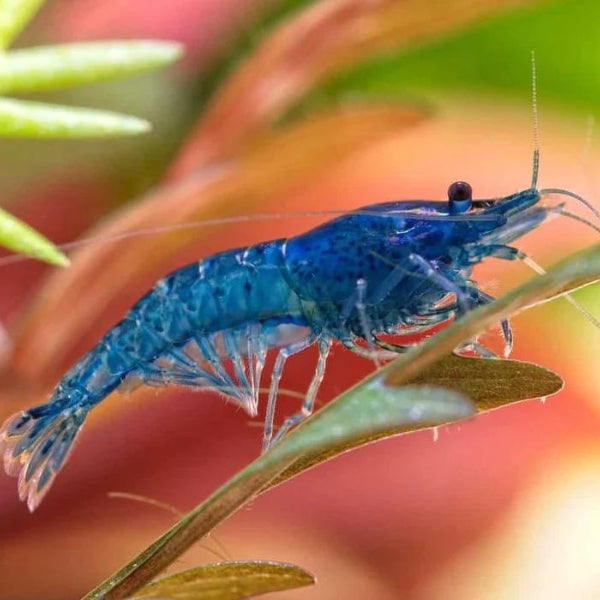
Very small fish or shrimp (may be eaten)
✨ Fun Facts
-
The Platinum color is caused by a recessive genetic trait that removes all dark pigmentation, giving the fish its luminous white-metallic look.
-
Their graceful, triangular fins and slow, deliberate movements make them living art pieces in aquariums.
-
Despite being cichlids, they can coexist peacefully with many community fish if tank space and structure are adequate.
Please note: We don't ship live animals. They are click and collect only!